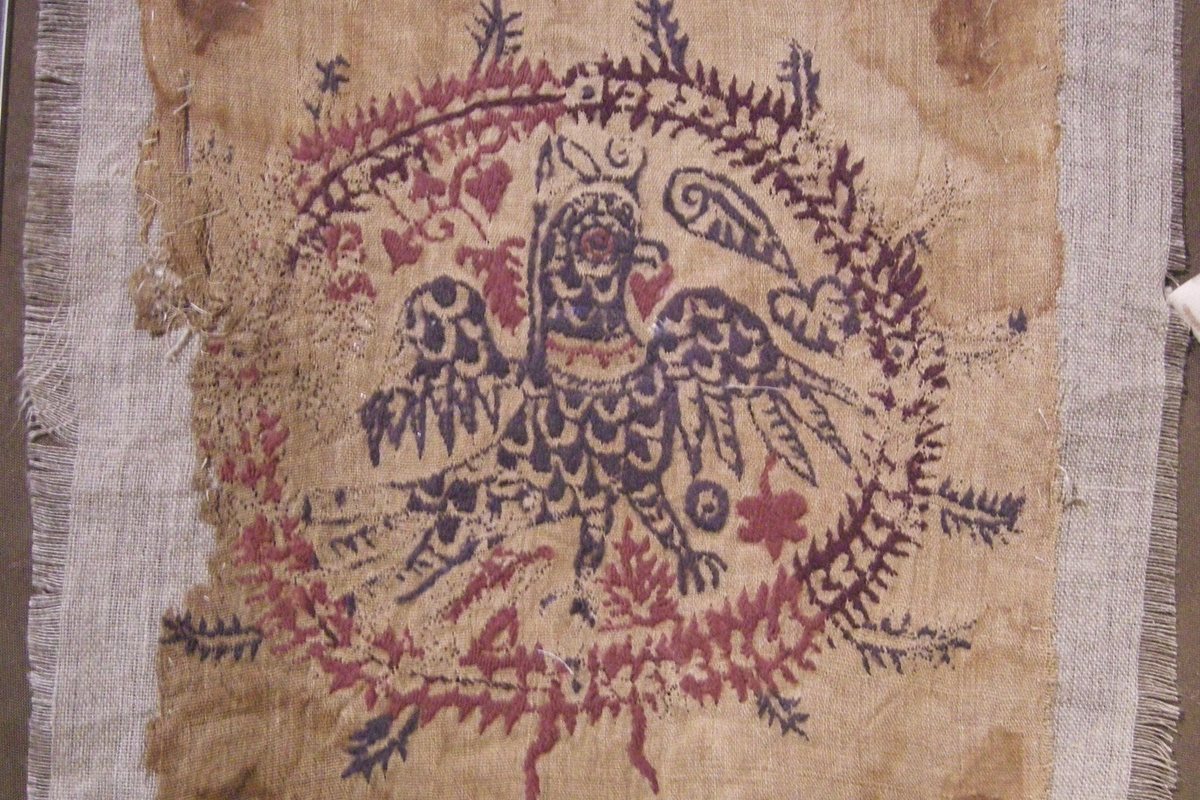
A textile is structure before it is image. Fibres were prepared and spun into thread; threads were counted, tensioned, interlaced, dyed, sewn, worn, repaired and sometimes reused. Museum display often flattens this sequence into a framed rectangle, especially when only a decorated fragment survives. Slow looking can restore construction, scale and bodily use while respecting the limits of a fragile object.
Begin at thread level
Look for differences in thread thickness, twist, colour and density where distance allows. Linen, wool and other fibres require secure identification rather than guesswork from softness or colour. The direction and tightness of spin affect weaving and appearance, but a public display may not make them visible. Copy technical terms from the label and avoid claiming a count you cannot reliably make through glass.
Find warp, weft and edge
A woven textile is organized by longitudinal warp threads and crossing weft, though display orientation may not match original orientation. Selvedges, starting borders and fringes help reconstruct the whole. Decorative tapestry areas may change weft colour and density within a base fabric. Trace structural changes before reading an image, because technique often explains why outlines, fields and repeated motifs look as they do.
Restore garment scale
A roundel, band or painted face may once have belonged to a tunic, hanging or furnishing. The framed fragment is not the original object category. Look for seams, cut edges, matching pieces and reconstruction drawings. If a museum identifies the placement, note whether that comes from preserved construction or comparison. Relating fragment size to a body helps recover use without pretending that the complete garment is known.
Separate dye from present colour
Light, burial chemistry, washing, previous treatment and display can shift colour. What appears tan may include faded or altered dyes; what remains vivid may have been protected by folds or soil. Scientific analysis can identify colorants and mordants more securely than sight. Use present colour as an observation and ancient colour as a documented claim. Photography and screen settings add yet another transformation.
Read repair, reuse and cutting
Patches, re-sewn borders, worn zones and later trimming show that cloth could move between roles. A garment might become furnishing, wrapping or a source of decorative pieces, but each proposed phase needs evidence. Historic collectors also cut and mounted textiles, affecting what museums inherited. Do not automatically attribute every straight edge to an ancient tailor. Collection history belongs beside production and use.
Question the isolated image
Birds, plants, figures and geometric borders can dominate interpretation once a fragment is framed like a picture. Return the motif to thread, garment placement and viewing distance. Compare neighbouring examples before naming a style or community. Iconography can connect broad visual traditions, but textile structure, inscription and provenance are necessary to locate a particular object responsibly.
Count labour without false precision
Select a one-centimetre area if the display permits close viewing and note approximate thread density rather than claiming an exact total. Then list preparation, spinning, dyeing, loom setup, weaving, sewing and repair as separate tasks. This does not calculate hours; it makes distributed expertise visible. Finish with the object’s inventory number, because technical catalogues may contain the counts and fibre analysis the gallery cannot show.
Compare front, reverse and mount
When both faces are documented, the reverse may clarify thread movement, joins, floats and later repair. In the gallery, it is often hidden for physical support and visual legibility. Do not invent it. Check institutional photography or catalogues, and record the mount as part of present access. A backing can stabilize a vulnerable fragment while limiting structural information, a real conservation trade-off rather than a display failure.
Touch nothing. Preserve uncertainty. Record the inventory number, museum and observation date. Confirm visitor rules with the institution.
Institutional sources reviewed 29 July 2026: Coptic Museum ↗ · National Museum of Egyptian Civilization ↗. Collection records and displays may change.