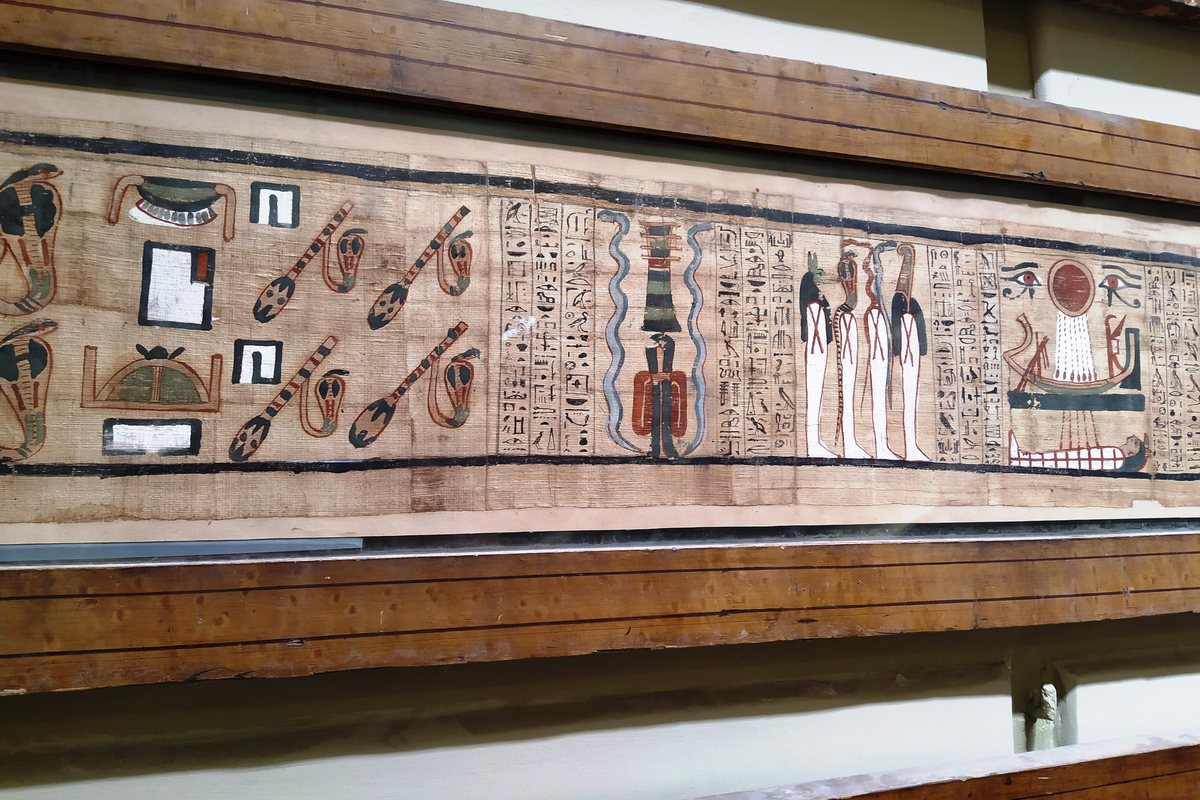
Papyrus in a museum is easy to read only as content: a spell, account, letter or image. Yet the support had to be made, sheets joined, surfaces prepared, lines planned, pigments mixed and rolls handled. Tears, fading and modern mounts shape what can now be read. Approach writing and image as material actions, while leaving translation and dating to documented expertise.
See the sheet before the text
Papyrus was made from plant strips arranged in layers and pressed into sheets. Fibre direction can help distinguish sides and joins, though mounts and distance may obscure it. Look for changes in texture, overlap and sheet width across a long roll. Do not assume every visible boundary is ancient; tears, old repairs and modern supports can create additional lines. The support organized the space available to a writer or painter.
Follow planning and line order
Margins, columns, ruling, registers and spacing reveal decisions made before and during inscription. A change in hand, ink density or alignment may indicate another working session or contributor, but such distinctions require specialist study. Record visible layout first. Ask how the reader’s eye was directed and whether the current horizontal display reproduces the way the document was originally unrolled, consulted or stored.
Keep pigment names evidence-based
Black and red inks are common descriptions, while painted papyri can add a broader palette. Exact ingredients and mixtures require analysis. Avoid naming carbon, iron or mineral pigments solely from hue. Note matte versus glossy appearance, colour layering and areas protected from light. Translation, iconography and chemistry contribute different kinds of knowledge; one should not silently stand in for another.
Read correction as work
Overwriting, erasure, insertion and changed spacing can make composition visible. They may record correction, reuse, instruction or later intervention. A blank area can be deliberate rather than unfinished. Compare the physical mark with a catalogue or facsimile before assigning a reason. The goal is to recognize that authoritative-looking text could develop through revision, collaboration and practical adjustment on a finite surface.
Treat legibility as a conservation outcome
Controlled light, low exposure and supportive mounting protect fragile sheets but may make them harder to see. Rotation or absence from display can be responsible care, not a missing attraction. Digital facsimiles can reveal detail and translation while changing scale, colour and texture. Record whether your observation comes from the original, a reproduction or an enhanced image, and never use flash where rules prohibit it.
Reconnect document and context
A museum title may identify genre, owner or findspot, but those fields can carry uncertainty. A funerary papyrus, administrative note or letter functioned in a social and architectural setting before collection. Copy provenance qualifiers exactly and check whether related fragments are held elsewhere. A complete-looking panel in one case may be assembled from sheets with a complicated excavation and collection history.
Build a material reading
Before reading the translation, spend two minutes on size, joins, margins, colour sequence, damage and mount. Then read the institutional interpretation and mark which questions it answers. This order stops content from making the object transparent. End with one sentence about the conditions required for the document to survive and one about the viewing conditions required to preserve it now.
Use scale to resist the perfect facsimile
A digital image can zoom far beyond normal gallery access and make faint marks legible, but it can also flatten joins, thickness, waviness and the relationship between sheet and body. Record the dimensions before enlarging details. When citing a transcription or enhanced image, name that source. The physical document, the museum display and the scholarly facsimile are connected versions, not interchangeable views.
Touch nothing. Preserve uncertainty. Record the inventory number, museum and observation date. Confirm visitor rules with the institution.
Institutional sources reviewed 29 July 2026: Egyptian Museum ↗ · Digital Giza ↗. Collection records and displays may change.