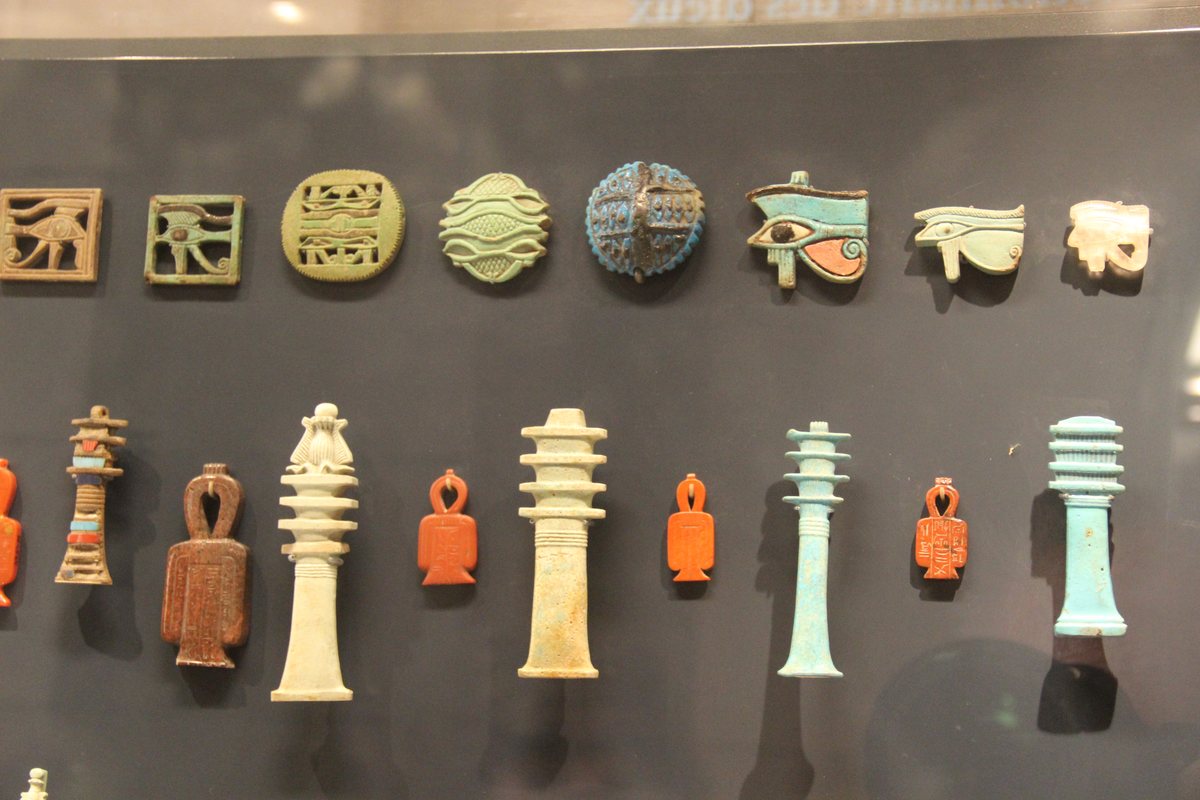
Choose one material question
Cairo’s museums are too substantial for a single checklist. Choose one material—stone surface, wooden joins, metal corrosion, glazed colour, textile structure or written support—and carry the same observation sheet through one or two institutions. Comparison becomes meaningful when the question remains stable. Current access, opening arrangements, admission and photography rules must be checked with each institution close to the visit.
Use the Egyptian Museum for collection history
The Egyptian Museum in Tahrir brings archaeological objects together inside a building central to Egypt’s museum history. Dense displays can reward inventory-number research and comparisons across cases. Distinguish objects shown as an excavated group from pieces arranged by type or chronology. The display itself has a date and curatorial logic; it is not the object’s original context.
Use NMEC for long material continuities
The National Museum of Egyptian Civilization places material and practice across a broad historical span. Follow one technique or object type through changing contexts instead of treating periods as sealed rooms. Continuity of material does not mean continuity of meaning. Record where production, use, script, religious context or institutional framing changes even when the substance looks familiar.
Use the Coptic Museum and Museum of Islamic Art as centres
These specialised institutions should not be treated as optional postscripts to a pharaonic route. Textile, wood, stone, metal, glass, ceramic and manuscript traditions support their own historical questions. Compare construction, reuse and display language on their terms. A familiar motif may indicate adaptation, shared technique or new production; physical and contextual evidence must decide which.
End with a six-field comparison
After the visit, record institution, inventory number, labelled material, visible process, survival condition and display choice for two objects. Add one uncertainty rather than forcing a conclusion. This short comparison produces a more durable account than a gallery photo stream and gives you precise terms for later searching in institutional catalogues or research publications.
Allow the route to change
A gallery may close, an object may rotate, or travel time may remove the second museum from your day. Keep a material question that can transfer to another case instead of depending on one famous object. Before leaving, choose a backup institution from the official directory. This flexible method protects both attention and accuracy while avoiding the false certainty of a fixed independent itinerary.
Material interpretation starts with careful description. Conservation diagnosis and current access belong to responsible professionals and institutions.