Metal objects concentrate transformations that are hard to see in a finished gallery surface. Ore became workable material through mining, fuel, heat and controlled cooling; an object could then be cast, hammered, joined, sharpened, repaired, melted and made again. Corrosion may hide those decisions while also preserving a record of burial. Read metal through process and circulation, not only through shine or preciousness.
Use the museum’s alloy language
Copper, bronze, brass, iron, silver, electrum and gold describe different materials and technical histories. A dark green surface does not prove bronze, and a golden colour does not prove solid gold. Copy the label’s wording and qualifiers. Scientific techniques can identify elements and manufacturing zones, but public labels may simplify results. Keep your visual description separate from an institutional or laboratory identification.
Distinguish shaping processes
Casting can reproduce complex forms; hammering and annealing can thin or raise sheet; chiselling, engraving and chasing articulate surfaces; soldering, riveting and mechanical joins combine parts. One object may use several methods. Search for seams, repeated hammer texture, sharp incisions, hollow areas and attachments. Avoid diagnosing a lost-wax process from overall smoothness alone. Technical imaging and published examination offer firmer evidence.
Find the composite object
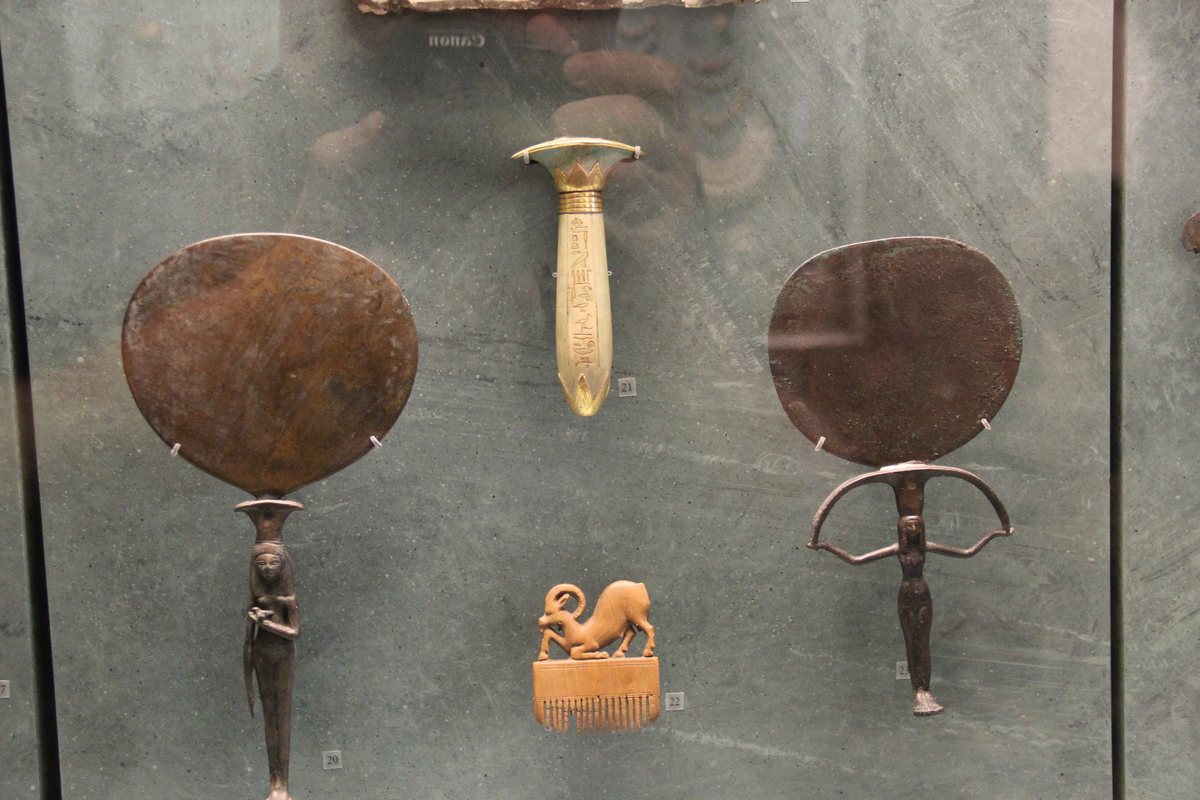
Mirrors pair reflective discs with handles; statues can combine cast bodies, separate crowns, inlaid eyes and wooden cores; vessels may add handles, rims and precious-metal details. Different components could come from different specialists and supply chains. Note colour boundaries and joins, then check whether the museum identifies original parts, ancient replacements or modern reconstruction. Material hierarchy often appears in where expensive substances were placed rather than in total weight.
Read corrosion as a transformed surface
Green, blue, brown, red or black products may form through reactions between metal, burial environment and later storage. Some layers are stable; others can remain active and damaging. Never assume the visible surface is the original colour or polish. Conservation decisions may preserve patina, remove unstable products or support fragile mineralized areas. Treatment should be learned from documentation, not inferred from how clean an object looks.
Remember recycling and scarcity
Metal can be melted and returned to circulation, so surviving objects represent only part of ancient production. Repairs, mixed alloys and recast components may reflect value and supply rather than inferior craft. Absence from an archaeological context may result from recovery and reuse. A heavy display of elite metalwork can therefore distort the balance between what existed, what was deposited, what survived and what collectors later selected.
Put reflection and sharpness back
A corroded mirror once depended on a prepared reflective surface; a blunt blade once relied on edge maintenance. Function changed as surfaces changed. Museum cases correctly prevent handling, so recover lost performance through verified replicas, technical discussion or wear analysis rather than imagination alone. Distinguish ceremonial forms from working tools, and do not assume every weapon-shaped object carried the same practical use.
Write a transformation chain
Record the object as a sequence: raw supply, alloy preparation, shaping, finishing, use, repair or recycling, burial change and conservation. Leave stages blank when evidence is absent. For each filled stage, mark whether the source is visible form, museum text or outside research. This chain exposes how much of metal history occurs before and after the apparently complete object in the case.
Compare a group before isolating a masterpiece
Several mirrors, tools or figures can show ranges in scale, alloy description, joining and surface condition that one celebrated object cannot. Note which differences are ancient and which may result from burial or treatment. A gallery group may have been assembled typologically rather than excavated together, so copy provenance for each item. Similar form supports comparison; it does not prove one workshop, date or owner.
Touch nothing. Preserve uncertainty. Record the inventory number, museum and observation date. Confirm visitor rules with the institution.
Institutional sources reviewed 29 July 2026: Egyptian Museum ↗ · Museum of Islamic Art ↗. Collection records and displays may change.