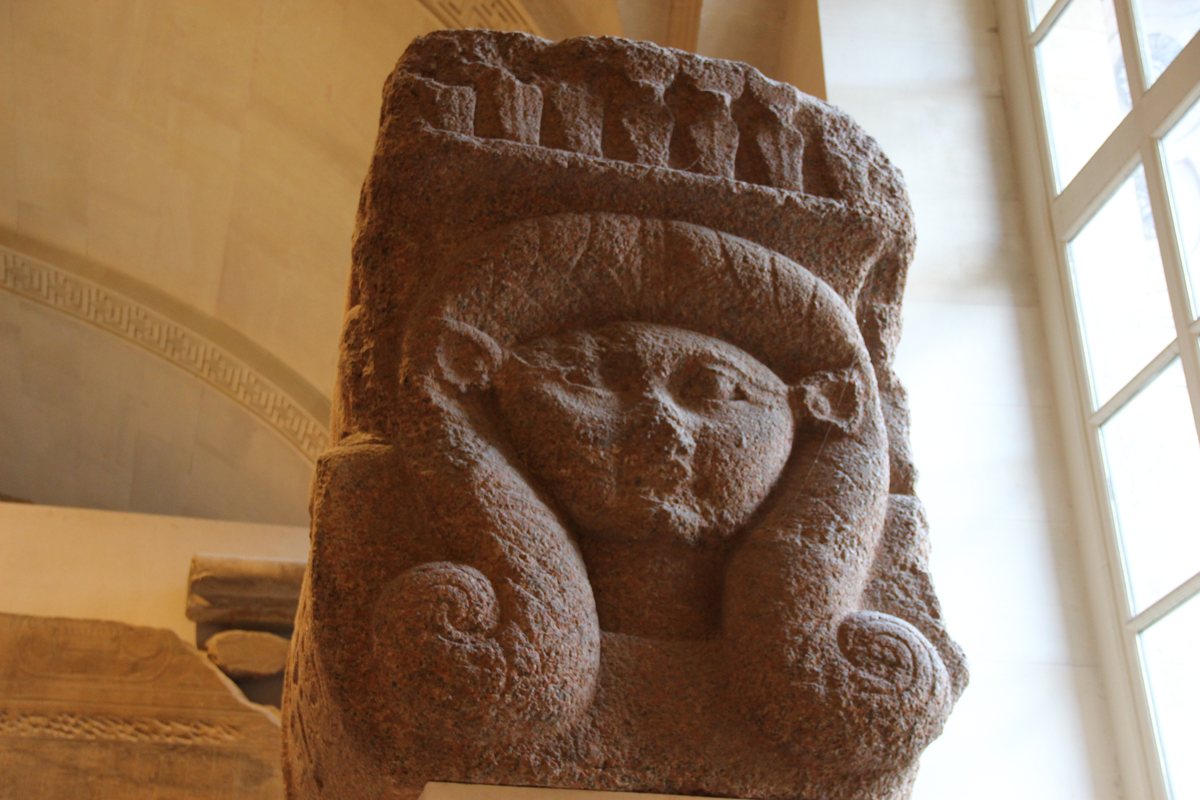
Stone can look timeless in a museum because weight and hardness suppress the sense of process. Yet every object began as geology in a particular landscape and passed through extraction, transport, design, carving, abrasion and finishing. Later breakage, reuse, excavation and conservation added other surfaces. The useful question is not simply what kind of stone you see, but which decisions and events made its present appearance possible.
Start with what the label can support
Copy the museum’s material identification exactly, including any uncertainty. Granite, granodiorite, limestone, sandstone, calcite and basalt are not interchangeable visual categories, and confident identification may require petrographic or geological study. Colour alone is unreliable under gallery lighting. Record grain size, visible crystals, banding and translucency as observations; treat the geological name as institutional information unless you have the evidence to test it.
Find the sequence beneath the polish
A finished face can hide earlier work, while the back, base or broken edge may preserve it. Look for broad quarrying scars, repeated point marks, parallel abrasion, drill traces and increasingly smooth zones. Do not turn one mark into a complete toolkit. Instead, propose an order from rough removal to fine finish, and note where the sequence stops. Unfinished zones may reveal placement, workflow, repair or interruption rather than lack of skill.
Use scale to make transport visible
Monumental stone turns distance into labour. Estimate height and width from the label, then imagine—not as spectacle, but as logistics—the support, route and coordination needed before carving or installation. A geological source does not by itself prove the entire route. Inscriptions, quarry records, archaeological context and technical study strengthen the connection. Keep ancient transport separate from the modern journey into storage, conservation and gallery display.
Read the planned viewpoints
Compare front, sides, top and back wherever the case or gallery permits. A sharply finished front and flatter rear can indicate an intended architectural setting or viewing axis. Deep carving may respond to light and distance; shallow details may reward close access. Present museum lighting creates a new viewpoint, so move slowly and separate what the object does from what the spotlight makes dramatic. Never cross a barrier to complete the view.
Treat damage as more than absence
A missing nose, split surface or abraded inscription has a history. The cause might involve ancient alteration, reuse, collapse, burial pressure, salt, excavation, transport or modern handling. Shape alone rarely proves motive. Describe location, direction and edge quality, then consult the label or conservation record. Damage can change identity and legibility, but it should not automatically become a story of deliberate erasure.
Search for colour where stone seems bare
Many stone surfaces were prepared, painted, gilded or inlaid. Recesses and protected edges may retain traces invisible from normal viewing distance, while conservation imaging can reveal more. Do not digitally or mentally repaint an object from a few pigments without a published reconstruction. Note the trace, its position and the source that identifies it. The current pale surface is one phase in the object’s biography, not necessarily its intended appearance.
Make a stone record
Write four lines: material as labelled; visible working traces; planned viewing direction; later surface change. Add the inventory number and one question that only technical study could answer. This keeps your attention on evidence rather than fame. When comparing two sculptures, choose similar scale or function before ranking finish. Different stone, placement and date may explain contrast more accurately than a simple claim that one workshop was better.
Compare stone without making a quality ladder
Place two objects side by side in your notes and compare grain, scale, depth, finish and intended viewing distance. Differences may follow material behaviour, architectural role, workshop sequence or later surface history. Do not translate smoothness automatically into greater skill or value. A coarse surface can be deliberate, unfinished, concealed or altered. The comparison is useful only when it names the variables that differ and the evidence still missing.
Touch nothing. Preserve uncertainty. Record the inventory number, museum and observation date. Confirm visitor rules with the institution.
Institutional sources reviewed 29 July 2026: Egyptian Museum ↗ · Digital Giza ↗. Collection records and displays may change.