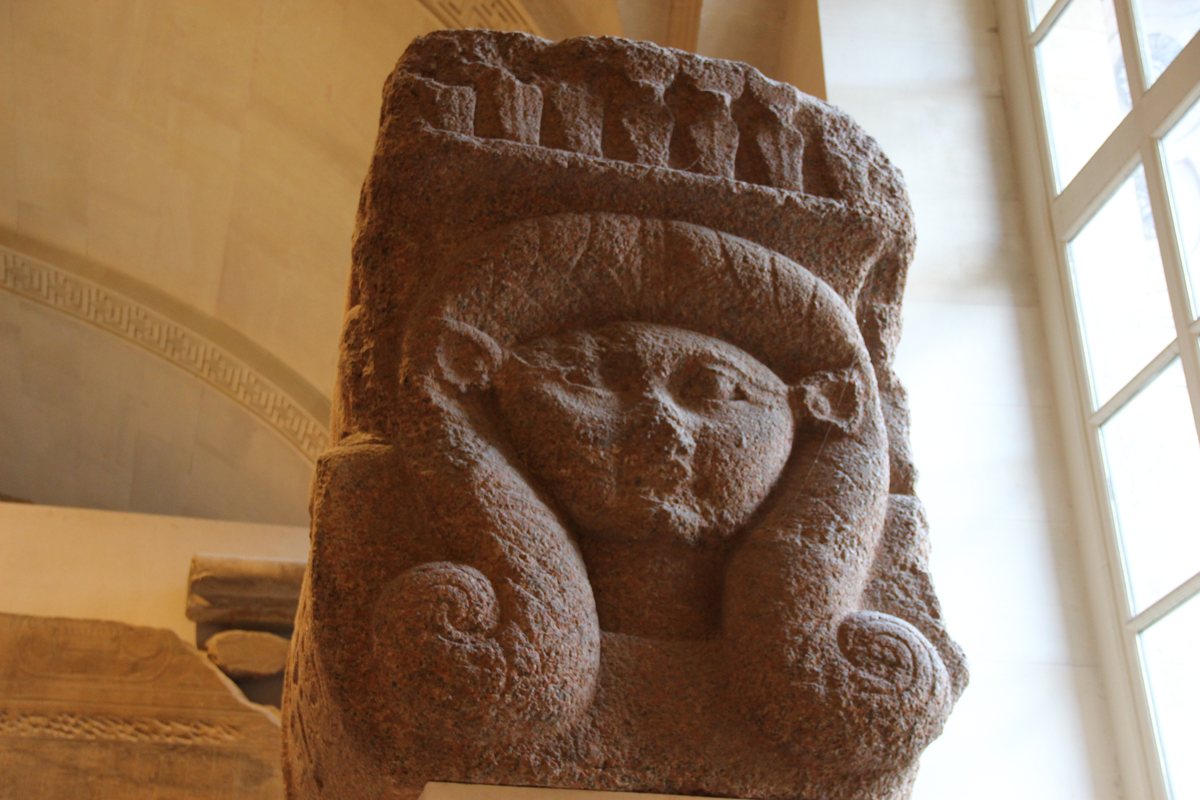
Porous material holds an environment
Stone, ceramic, plaster and other porous materials can absorb solutions containing dissolved salts. As water moves or evaporates, salts may crystallize at or below a surface. The visible powder, flake or crust is only part of a complex condition. Do not touch or test it, and do not assume dirt. Museum conservators combine observation, analysis and environmental records before choosing treatment.
Humidity changes matter
Some salts dissolve and recrystallize as relative humidity changes. Repeated cycles can place pressure on pores and decorated surfaces. A stable display may therefore matter more than dramatic cleaning. Case design, storage and monitoring are part of the object’s material biography even when visitors cannot see them. A condition report or conservation panel is a stronger source than a snapshot taken on one visit.
Surface loss changes what can be read
Scaling can remove pigment, tool marks and inscriptions as well as stone or plaster. This affects both physical condition and interpretation. A lightly carved sign may become incomplete; colour distribution may seem more limited than it once was. Published photographs from different dates can help document change, but variations in lighting and processing must be considered before they are treated as direct proof.
Desalination is not a universal recipe
Conservation treatments depend on material, construction, value of retained residues and condition. Introducing water can be inappropriate for composite or soluble objects. Visitors should resist simple advice such as washing a surface or sealing it. The responsible question is what investigation supports the chosen method and how treatment balances access, stability and the preservation of evidence.
Make the display case part of your note
Record whether an object is enclosed, supported, isolated from a wall or accompanied by environmental information. These are observations about display, not diagnoses. Add the material and visible condition in neutral terms—flaking, pale accretion, loss—without naming the cause unless the museum does. This vocabulary respects conservation expertise while still making the present care of ancient material visible.
Separate observation from monitoring
A visitor can record a pale deposit, lifted flake or protected case, but cannot know whether a condition is active from one encounter. Conservators compare photographs, measurements and environmental data through time. Phrase your note in the present tense—what is visible today—and cite any institutional diagnosis separately. This prevents a neutral surface description from becoming an alarmist claim about deterioration.
Material interpretation starts with careful description. Conservation diagnosis and current access belong to responsible professionals and institutions.